
The Norwegian flag flew high over Kapp Linné as Norway’s Minister of Climate and Environment, Espen Barth Eide, formally granted Isfjord Radio protected status. He described it as “a truly unique preservation project.”
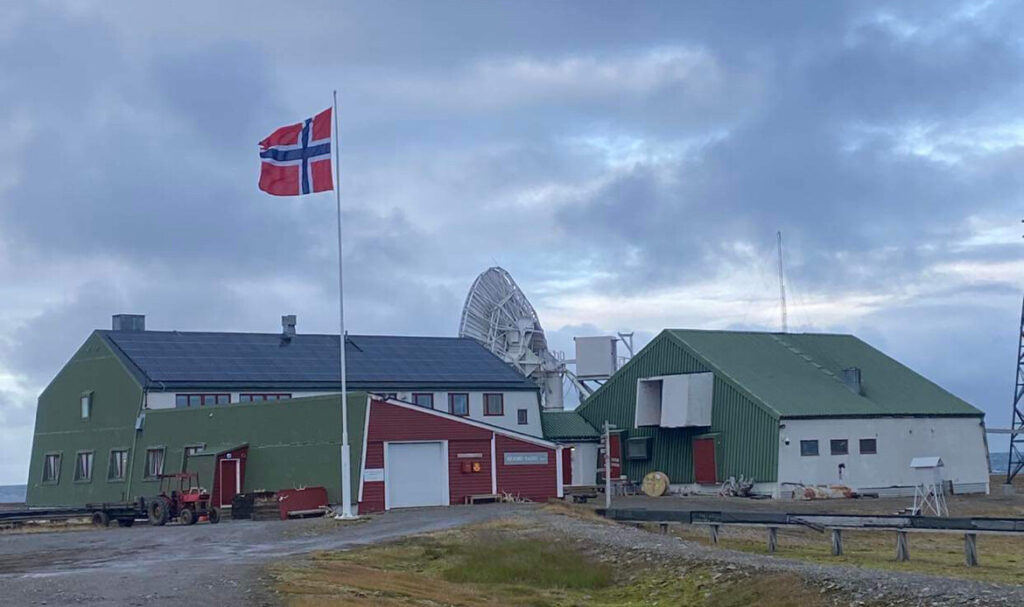
The purpose of the protection is to safeguard Isfjord Radio as a complete and coherent cultural heritage site for communication, navigation and meteorological services on Svalbard — from the first sea marker established in 1912 to the station’s full automation and remote operation in 1999.
For decades, Isfjord Radio served as a vital communication link between Svalbard and the rest of the world. It functioned as a crucial hub that improved safety for maritime and aviation navigation across large parts of the Arctic.
The Directorate for Cultural Heritage emphasised the station’s significance as a secure and central support point in a region where travel once meant risking one’s life. Before transmissions began from Isfjord Radio, navigation in these waters and skies carried far greater uncertainty.
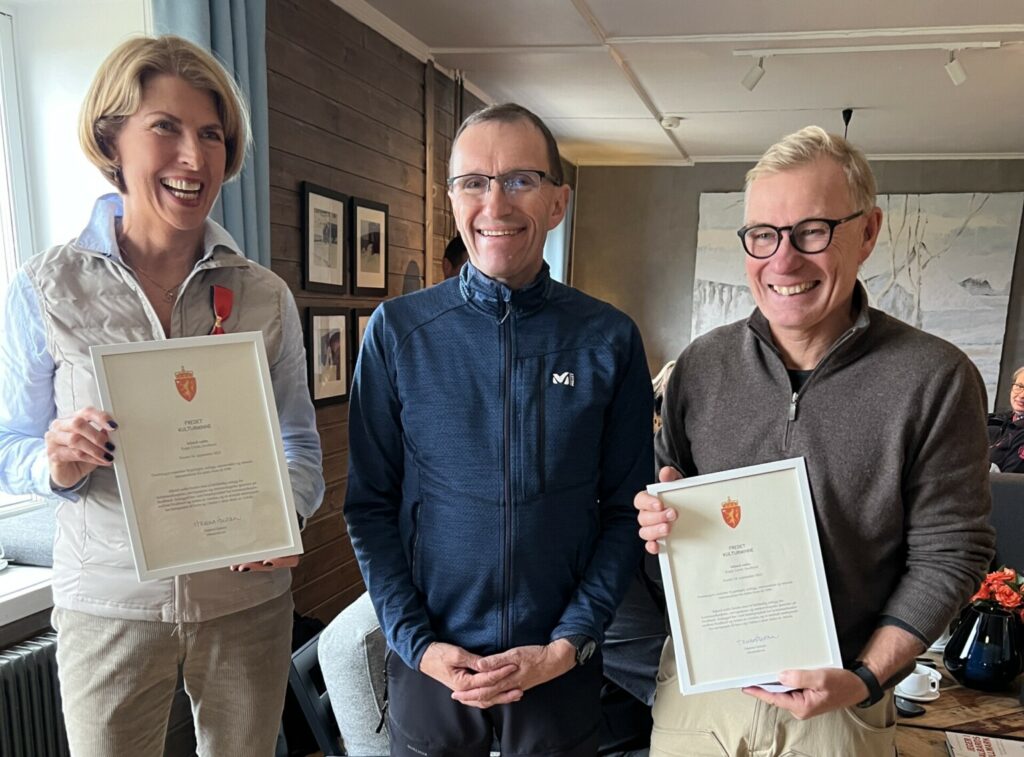
Brita Knutsen Dahl, Basecamp Explorer, Espen Barth Eide & Rune Midtgaard, Store Norske
The official ceremony took place at Kapp Linné on 14 September 2023, the day after the station marked its 90th anniversary. The Minister and representatives from the Directorate were given a comprehensive tour of the site, including insights into Svalbard’s telecommunication history presented by Christian Skottun of Telenor Svalbard, and an introduction to the innovative energy transition project led by Mons Ole Sellevold of Store Norske.
Minister Barth Eide highlighted how remarkable it is to see this historic site still actively in use. He pointed to Basecamp Explorer’s long-term stewardship and adaptive use of the buildings as a strong example of preservation through purpose. The continued operation of important telecommunications infrastructure at the site further reinforces the principle of protecting heritage by keeping it alive and relevant.
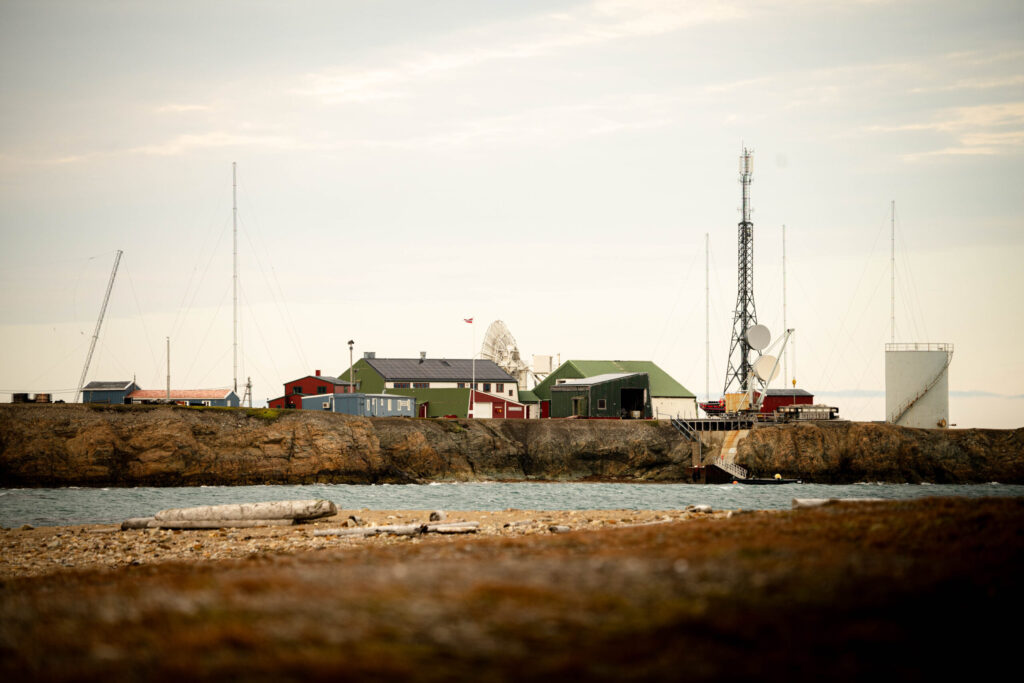
He also underscored the uniqueness of the preservation effort and expressed particular appreciation for the energy transformation underway. Supported by Enova, the station is gradually reducing its reliance on diesel and transitioning toward renewable energy solutions — an important step in this Arctic microcosm.
At Isfjord Radio, history, culture and heritage meet innovation and future responsibility. A place once defined by survival and signal transmission continues to evolve — grounded in its past, and aligned with the future of the Arctic.
– Traveling to Svalbard, by far the most remote destination I have ever visited, was literally wild. Already in Longyearbyen came the feeling of being on another planet, says Kristen Kish.
– The boat trip out to Isfjord Radio was a lovely encounter with the mighty nature, but I quickly realized that it can present dangers. The first thing that met me at Isfjord Radio was the guide who handed me a signal gun that I had to learn to use. We canceled a dive because of polar bears, but I didn’t have to use the gun.
Together with Rogier Jansen, head chef at Isfjord Radio Adventure Hotel, Kristen caught and refined arctic ingredients for over a week. Well documented by a film team of 25 people from National Geographic, for a new series: Restaurants at the End of the World.
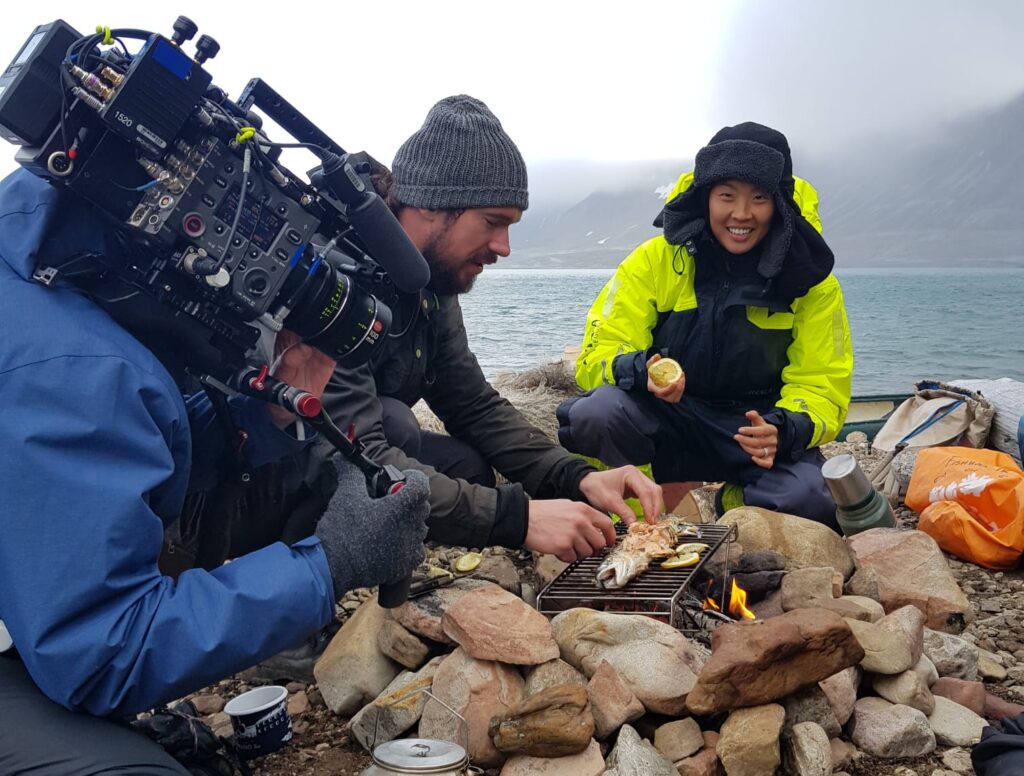
– Nature is completely unpredictable, and cannot be planned into either experiences or film production. In an encounter with polar bears, walruses and the harsh arctic wilderness, I felt an intense awe at being completely close to the elements of nature, says Kristen Kish.
Kristen Kish is known for her own restaurant concept, cookery book publications and not least as the winner of Top Chef US in 2012. In National Geographic’s new series, she visits chefs who have specialized in making full use of local ingredients, based on the restaurants’ location far off the beaten track. Isfjord Radio is the most remote location in the series.
– Rogier has a professional standard that I value as a chef, and he is fearless in the kitchen. Homemade kimchi in passion fruit sorbet? Ptarmigan as a flavoring agent in the drink? I got the kimchi in sorbet wrong, it was lovely. But ptarmigan in genever became too strange, believes Kristen.
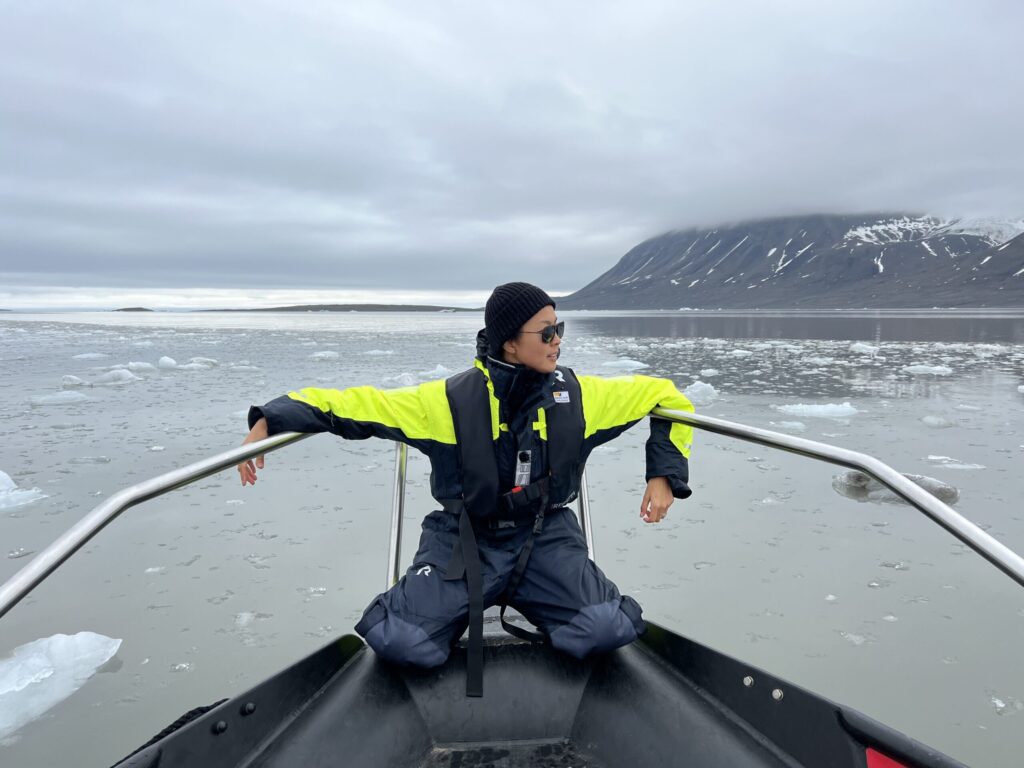
Rogier Jansen has been head chef at Isfjord Radio for two years, and sources most of the ingredients from two trapper stations on Svalbard. In addition, Rogier puts on a diving suit and looks for edible ingredients in the sea, or he fishes for arctic char in the Linnévannet, which is a short walk from the station.
The chefs’ play and refinement with Arctic ingredients is presented in the series to selected guests, with the goal of recognition from Brita Knutsen Dahl, who was responsible for developing the food concept at Isfjord Radio.
– Each and every guest should be surprised by the variety and standard of the food at our outpost in the west. Kristen and Rogier surprised me, including home-fished Arctic char and a very special drink with ptarmigan, says Brita Knutsen Dahl.
Kristen and Rogier’s play with the Arctic raw materials can be seen in a scenic episode on National Geographic and Disney+.
Longyearbyen is a strange mix of Arctic nature, old history and modern technology. Here you can find both high speed internet and polar bears, right next to each other.
Longyearbyen is a combination of modern houses and old mining structures. You can see children walking to and from the school along with reindeer. You can sit with a cup of coffee using a highspeed internet connection, while others walk past with rifles. Spitsbergen is a place of contrasts.
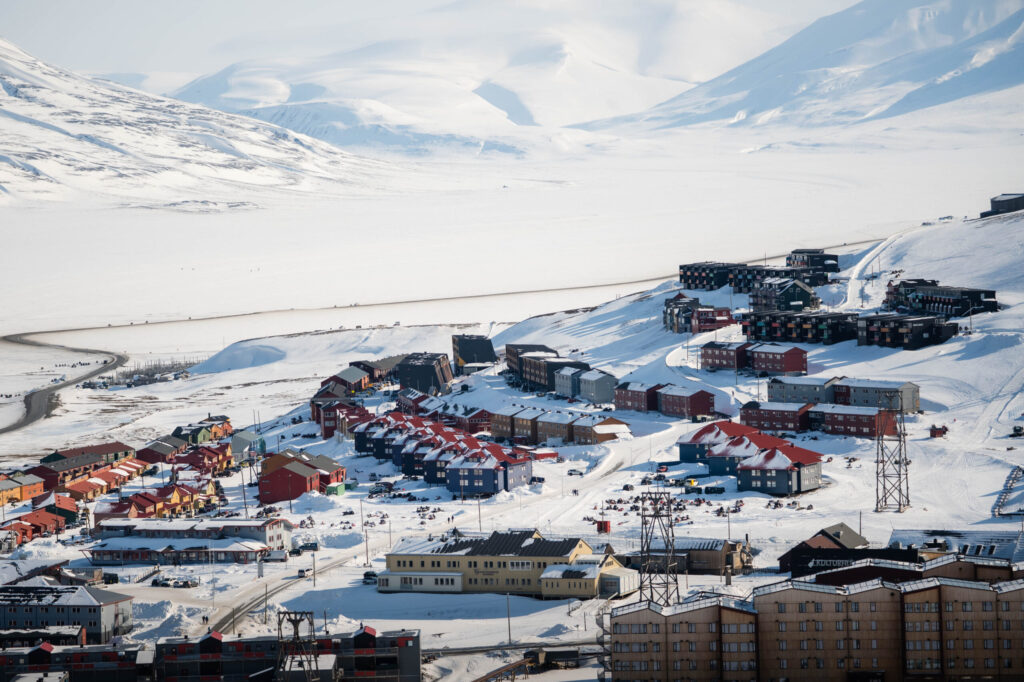
Arriving by plane or boat is really the only possibility when it comes to visiting Longyearbyen. It’s a roughly three hour flight from Oslo. Longyearbyen is located in small valley of Longyear, surrounded by mountains on three sides, with the Adventfjord on the fourth.
For more than a century, this settlement was built on coal. Founded in 1906 by American industrialist John Munro Longyear, Longyearbyen grew as a company town shaped by mining, hardship and resilience. The rhythm of life followed the shifts underground. Coal dust, narrow-gauge rail tracks and wooden barracks defined the early skyline.
But in June 2025, an era ended. Coal mining, the backbone of the community for generations, officially closed. And with it, Longyearbyen turned a decisive page in its history.
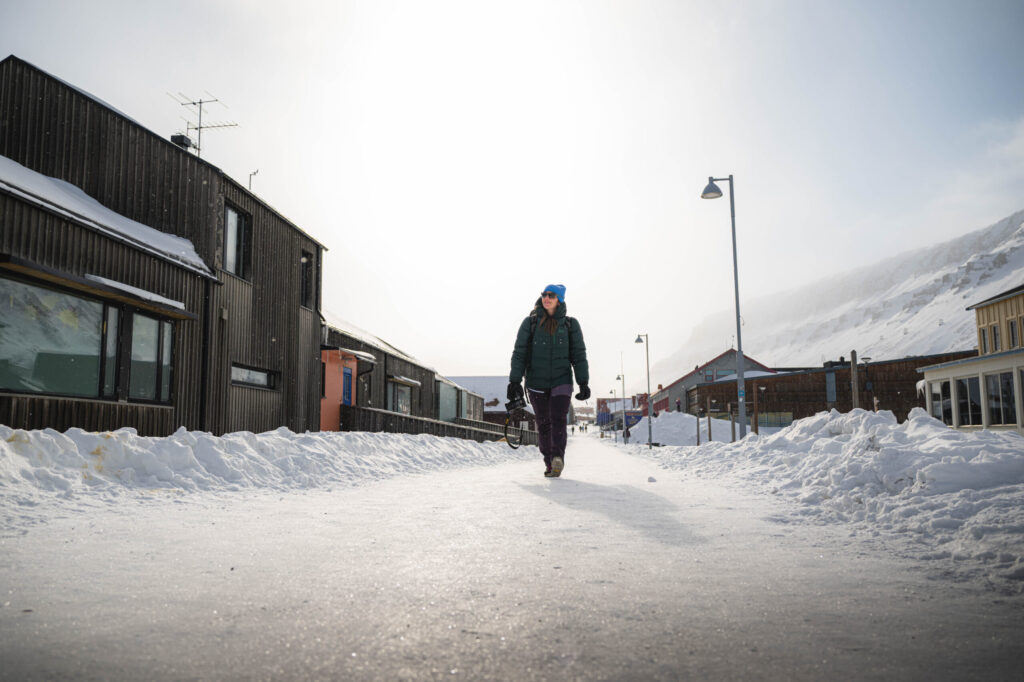
Today, Longyearbyen stands as a modern Arctic frontier town where research, education and tourism have taken the lead. Scientists study climate change at the world’s edge. Students arrive from across the globe to attend university courses in Arctic biology and geology. Entrepreneurs, chefs and guides build businesses shaped by the landscape rather than extracting from it.
Tourism has become the town’s largest industry, but not mass tourism. Here, travel is about scale, silence and substance.
Snowmobiles replace city traffic in winter. Kayaks and expedition boats glide through ice-free fjords in summer. Polar bears outnumber people on the archipelago, a constant reminder that this is still the wild.
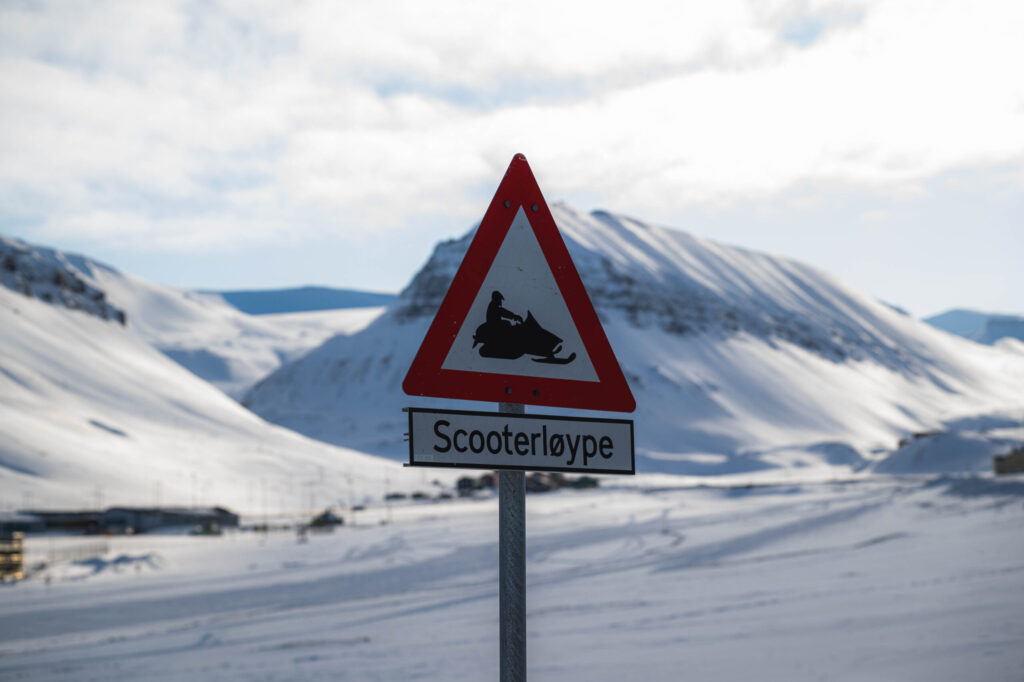
Longyearbyen may be small, but it carries an outsized personality.
There are craft breweries, world-class restaurants serving Arctic ingredients, contemporary art exhibitions and live concerts beneath the northern lights. You can sip cocktails at 78° north, visit a global seed vault safeguarding the planet’s crops, or join a dog sled expedition just minutes from town.
The streets are compact. The community is international. Around 2,500 residents from more than 50 nations live here, united by the shared experience of extreme seasons — four months of midnight sun and four months of polar night.
Step just beyond the final row of houses and you are in untamed terrain. There are no roads connecting Svalbard’s settlements. No trees soften the wind. Nature is immediate and uncompromising.
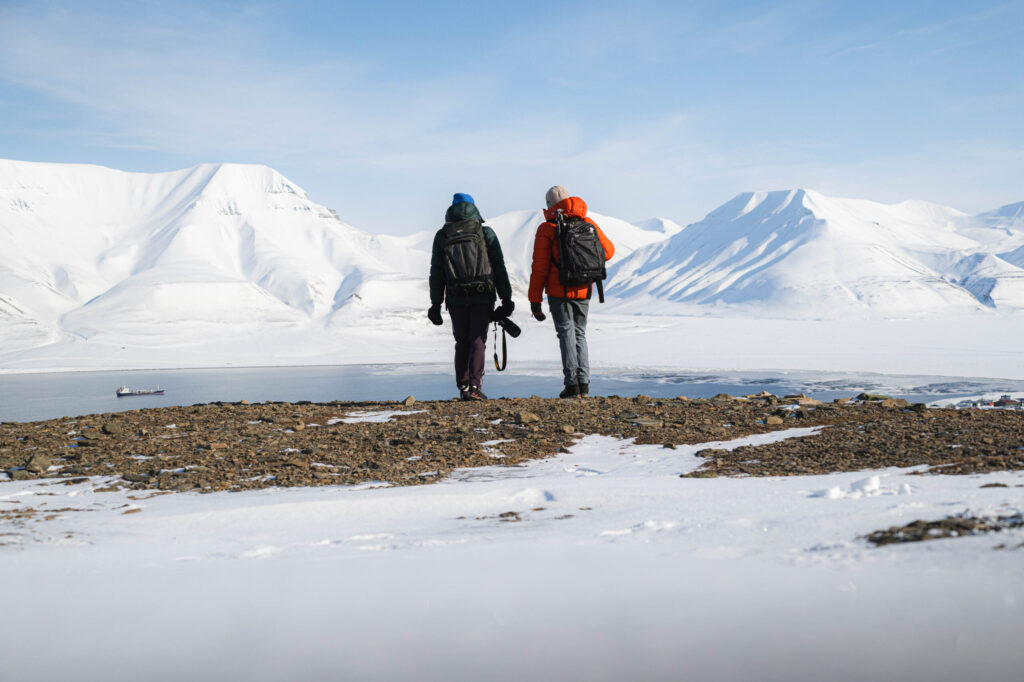
It is this proximity to wilderness that defines Longyearbyen. You do not visit the Arctic from here. You step directly into it.
Longyearbyen is no longer a mining town. It is something rarer — a community redefining itself at the edge of the world.
From coal to culture. From extraction to experience.
A frontier town entering a new chapter, shaped by knowledge, sustainability and a deep respect for the Arctic environment.
And yet, beneath the modern cafés and expedition gear stores, the history remains. The old mine entrances still cut into the mountainside. The stories of trappers and miners still echo in the wind.
Longyearbyen is not polished. It is honest.
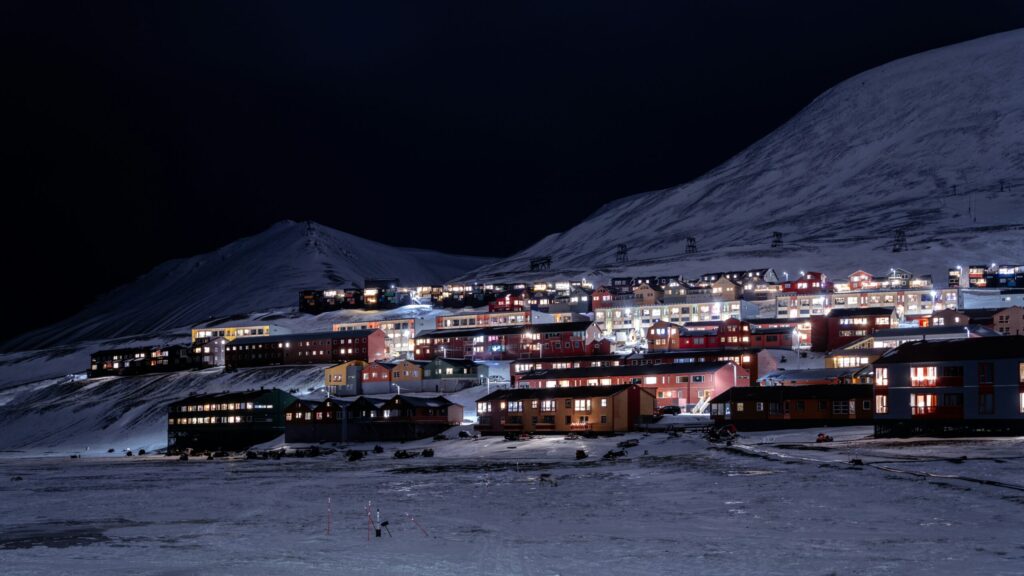
Trappers went north with dreams of the big catch, the free life, and adventure in the vast wilderness.
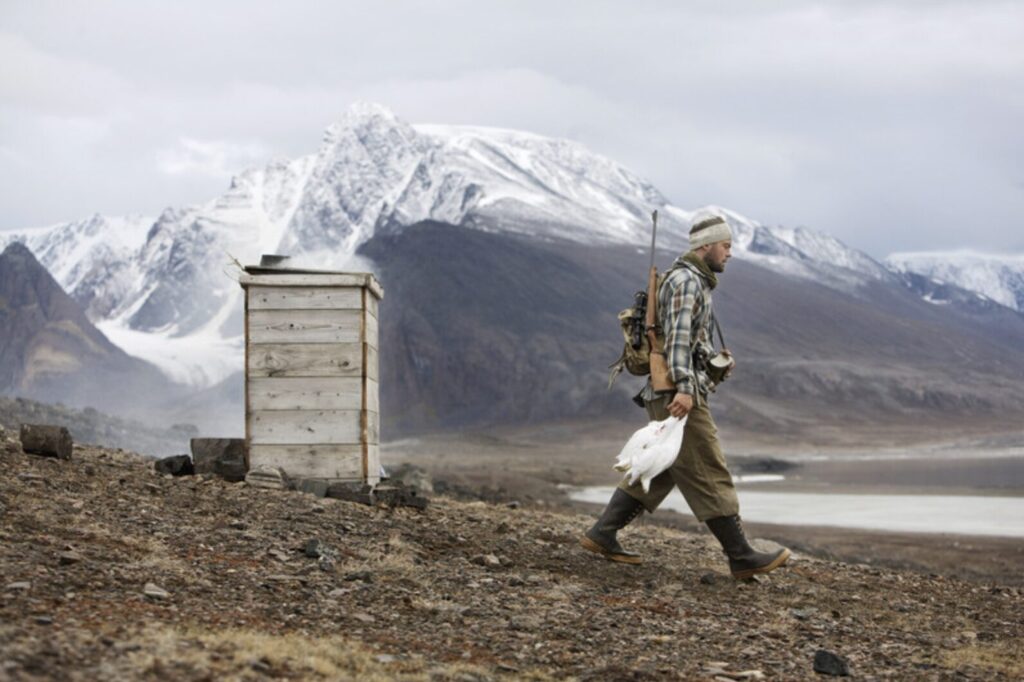
The primary goal for the Norwegian trappers was to catch as many arctic foxes and polar bears as possible, and to sell the fur in Norway. The reason to hunt in winter was the fact that only the winter fur brought good profits – the summer pelts were comparatively worthless. In addition to hunting for fur-bearing animals, the hunters and trappers made use of all the resources available in the Arctic terrain: seals, eggs and down from seabirds, including ptarmigan and geese, as well as driftwood for firewood and building materials.
Depending on the region, either arctic foxes or polar bears could be the more important prey. The fox was trapped with wooden traps, which killed the animal with heavy stone weights in order not to damage the fur. Polar bears were hunted mostly in the eastern parts of Svalbard, where sea ice is abundant. They were hunted with spring-gun traps, with poisoned bait (although this was soon banned) and, whenever the occasion arose, with rifles. Whenever possible, young bears were captured alive to be sold to zoos for good money.
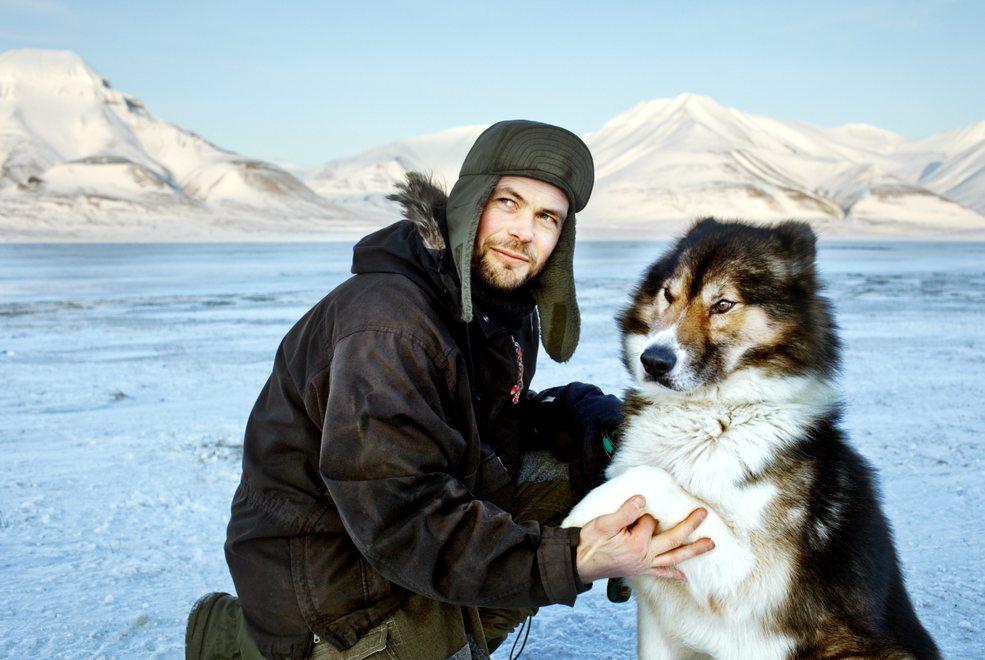
Hunting expeditions during the early years of the 20th century often comprised parties of as many as four to six hunters, The tendency later was for smaller parties of two people, or even one single man, wintering along. This marked the change from an industry, which was organized by tradesmen in northern Norway, to a lifestyle of individuals with a well-developed desire for personal freedom and tranquility. Figures like Hilmar Nøis achieved legendary status, and are well-known to this day. Their tales influence many people, mostly Norwegians, to pursue their dreams of life in the Arctic.
Tommy Sandal – one of the few remaining hunters on Spitsbergen. Polar dogs, such as Greenland huskies, were an important part of the trapping culture on Spitsbergen. Not only did the dog teams allow for faster transportation during wintertime, they also provided an alarm system warning of polar bears. For trappers living in total isolation for most of the year, these loyal dogs also provided some much-needed company during the dark season.
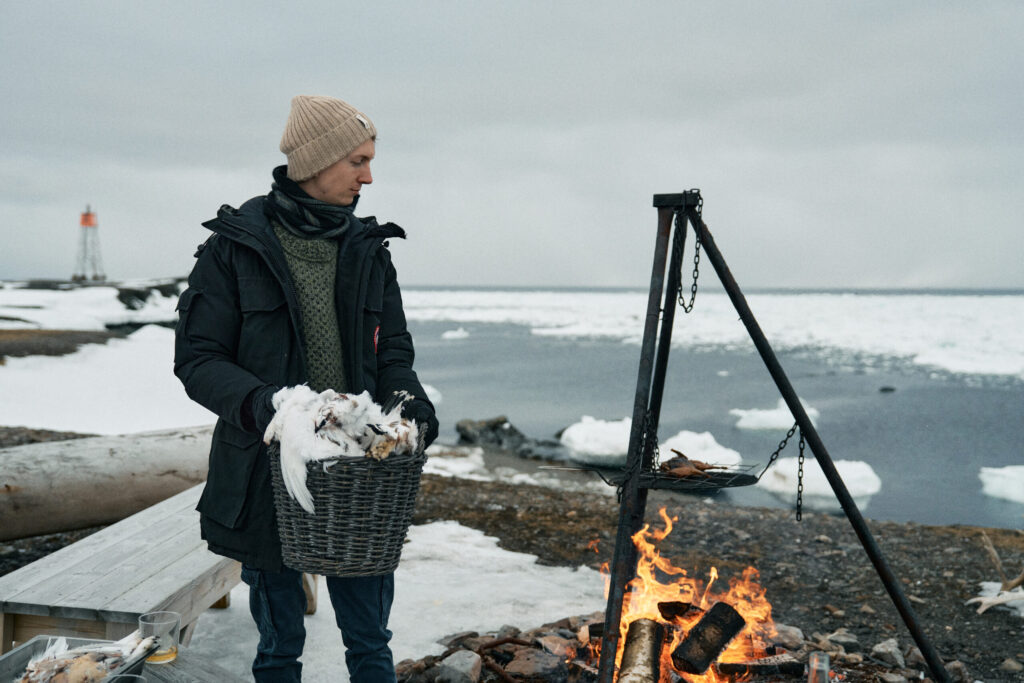
The hunters and trappers organized themselves, with main cabins known as base stations. In addition, most had several small huts that served as secondary stations. These were set up one or more day’s march from the base station. The landscape became a loose network of huts and trapping equipment, where paths or ski tracks formed fragile but tangible connections.
Those who wintered alone in the wilderness seldom became rich. The achievement of surviving all the dangers, coping with the isolation and loneliness in order to return home as an Arctic hero, was the main reward. The money earned from from the catch often came a distant second.
In summer 2013 Isfjord Radio was awarded the St Olav’s Rose, a hallmark of Norwegian Heritage.
The Rose is awarded to celebrate especially distinguished places that have succeeded in combining development and protection in modern ways. The Rose is a symbol of what binds together Norway’s unwritten history and its present – it embraces the global perspective and the historical landscape, both literally and metaphorically. The symbol of St Olav’s Rose stands for the combination of development and protection in modern society.

Brita Knutsen Dahl and Halvor Bakke.
For Basecamp, Olav’s Rose is the final stamp on the development plans we started with Halvor Bakke in 2007. From that time on, our aim was to tell the history of the station in modern times. We wanted our guests, such as you today, to be able to feel the history hidden inside the walls and explore the ancient Arctic with a modern touch. Our goal was to combine the old and the new in an innovative way, and we think that the hallmark of the St Olav’s Rose – now hanging on the wall of Isfjord Radio – shows that we have succeeded! We hope you will enjoy Isfjord Radio, with all your senses!
If the gold rush to Alaska was a big step to the unknown, exploring Spitsbergen’s mining opportunities was a step even further. Laying much further in the north than Alaska, deserted into the far end of the golf stream, this small archipelago was no man’s land – exiting opportunity for many adventurers. From late 1900 century, several companies traveled to Spitsbergen in order to find their treasure hidden far up north.
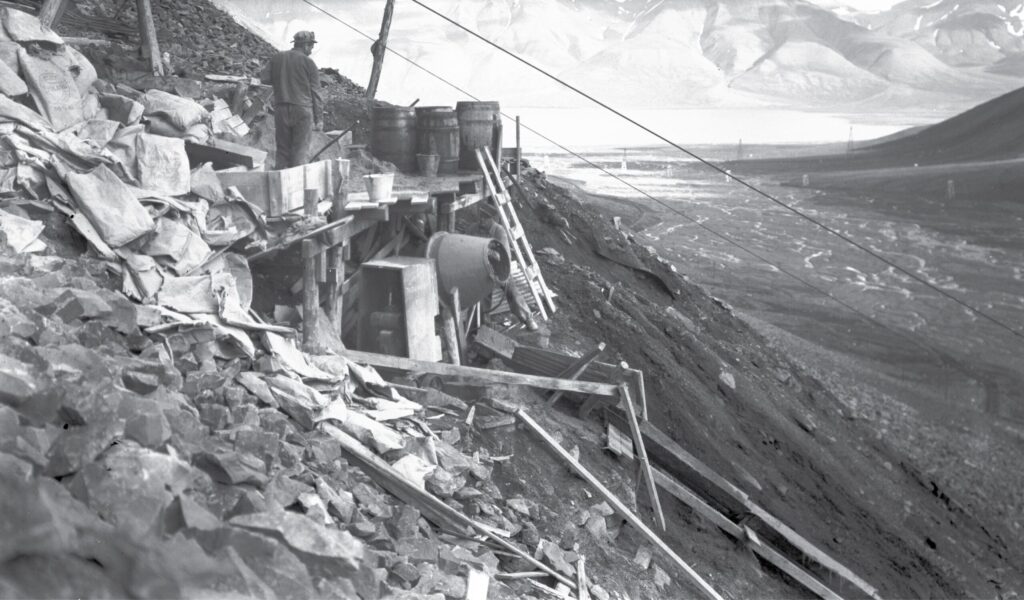
Coal had always been gathered by whalers and hunters on Spitsbergen for local use, but industrial mining did not start until 1899. It was a Norwegian Søren Zachariassen, who was the first to establish a mining company on Spitsbergen. He claimed several places around Isfjorden area and exported the first coal to mainland, thus starting the real coal rush to Spitsbergen.
A number of newly established companies occupied quickly large claims in Svalbard. Sometimes companies only paid some money to trappers, who were there anyway for hunting purposes, to keep an eye on their property. In other cases, quite some effort and investments was put into trial mining – sometime too soon. There are several sad stories of companies falling into bankrupt after being too optimistic for the mining opportunities.
The first commercially viable mining company was established by John Munroe Longyear. To explore the world Mr. Longyear sailed to Spitsbergen together with his family on a luxury cruise in 1901. It was merely supposed to be a holiday travel, but Mr. Longyear got interest in the vast landscape and barren nature of Spitsbergen. He collected some coal samples and when the samples turned out to be very good, the company Ayer & Longyear was established.
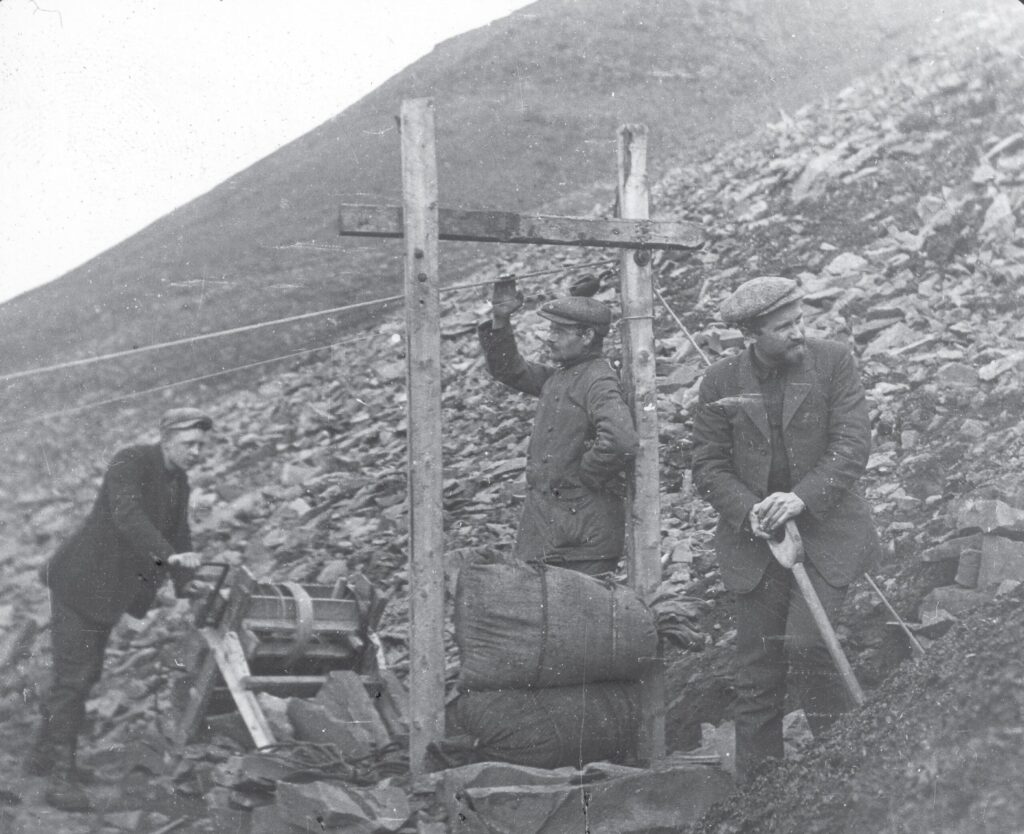
John Munroe Longyear was back in Adventdalen in June 1905, just 4 years after his first visit. They had load the ship with mining equipment and employed 25 miners to sail with them up to Spitsbergen. In 1906, The Arctic Coal Company was established and Mr. Longyear’s adventure could start.
The first mine, called American Mine, was established with the help of 25 miners brought from the mainland. The small mining town grew fast. Houses were built, water supply was secured, and cableway from the mine down to the harbor was built, making miners work much easier.
Mr. Longyear wanted to name the mining town after himself, and thus Longyear City was established in 1906. Longyear City grew fast over the next few years. In 10 years, Long year’s dream has grown from a small village of 25 miners into a town of 300 inhabitants. By 1916, Longyer City consisted of 25 buildings, divided into living quarters, community center, horse stables and warehouses. Mr. Longyear had built docks, power station, railways, as well as a radio station.
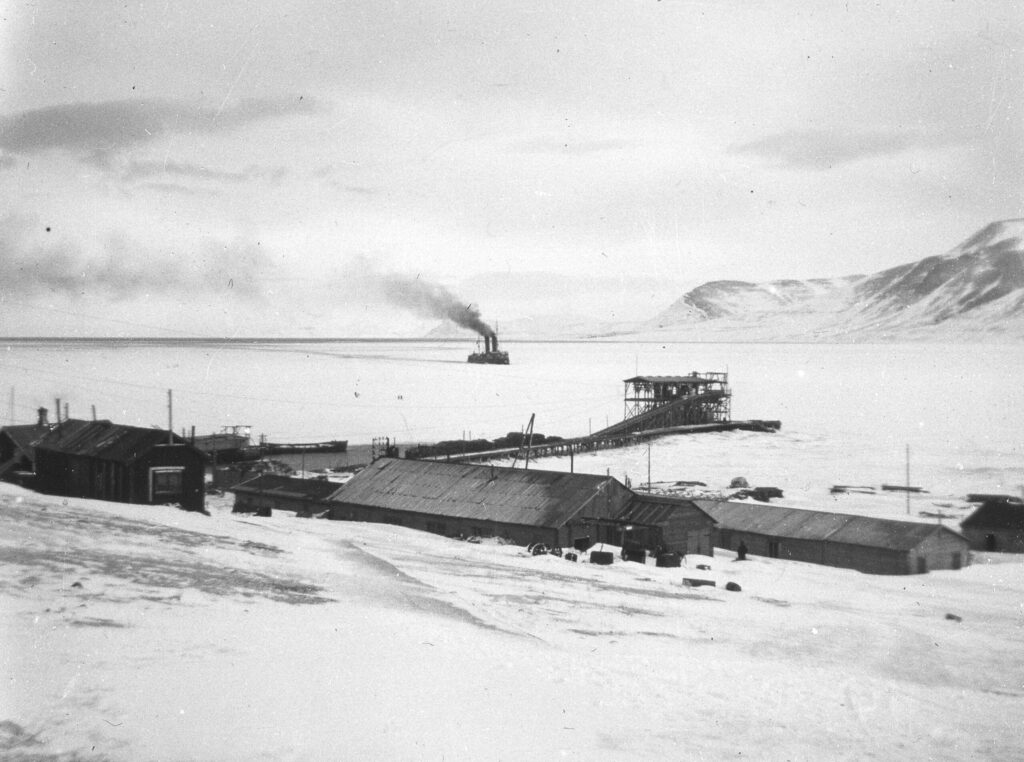
The coal industry in the Arctic turned out to be good business. In the period of 1907 – 1915, 173,000 tons of coal was shipped from Longyear City out to the mainland.
After several strikes in the mines, Mr. Longyear decided to sell the mine for Store Norske Spitsbergen Kullkompani AS in 1916. Store Norse bought the well-equipped mining town and changed the name better suitable for the Norwegian language. Longyearbyen was founded under Norwegian command and new era could begin.
As a young man, free in the world and able to choose your own path, it is often a desire to earn bit of money to your back pocket, while venturing further into the unknown world. It was these dreams, which made me to apply a job in the coalmines of Spitsbergen.
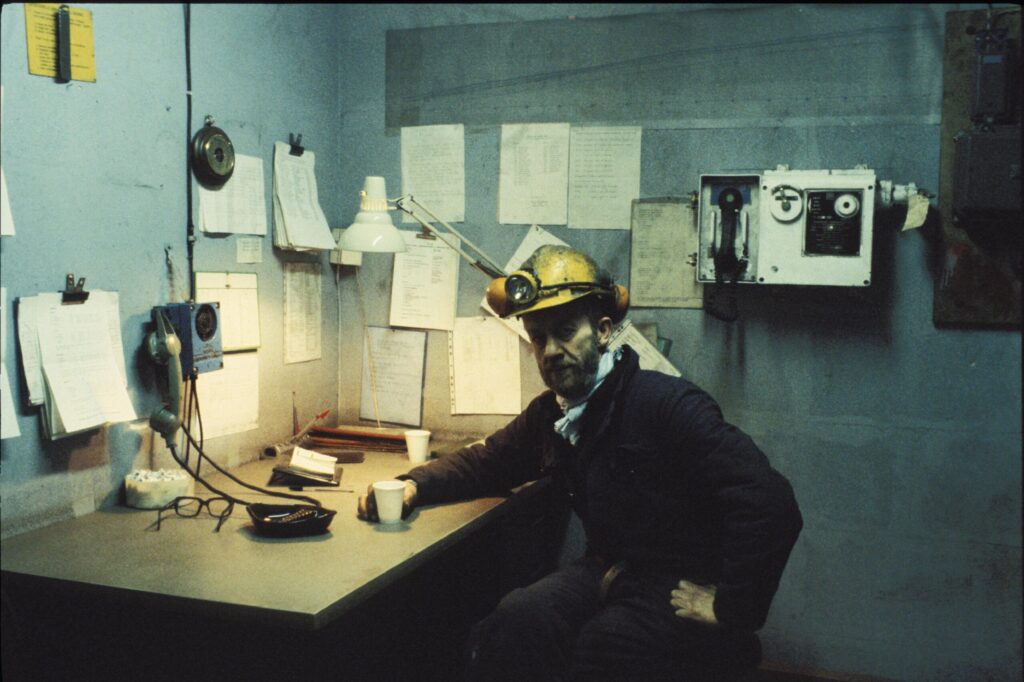
It was a long travel from home to Longyearbyen, located almost at the North Pole. Straight after landing my feet on Spitsbergen, I went to the manager’s office at Store Norske Spitsbergen Kullkompani. I got my first working schedule and was shown to my accommodation.
Without much of rest, I stepped on to the mining buss and drove up the mountain for my first shift. Just hours after my arrival to this small community town, surrounded by vast tundra and high mountains,
I was on my way to become a “gruvebus” – a real miner.
In the mine, I faced the black, dirty and silent men. After very short safety instructions, I assigned to a team of «kuttskiftet» – the cutting team. Just like all the rookies, I had to start from the bottom of the ladder. I was a “Grønnskolting” – miner with the green helmet. Though I did not know it yet, it had a special meaning to it. The green helmet meant hard work.
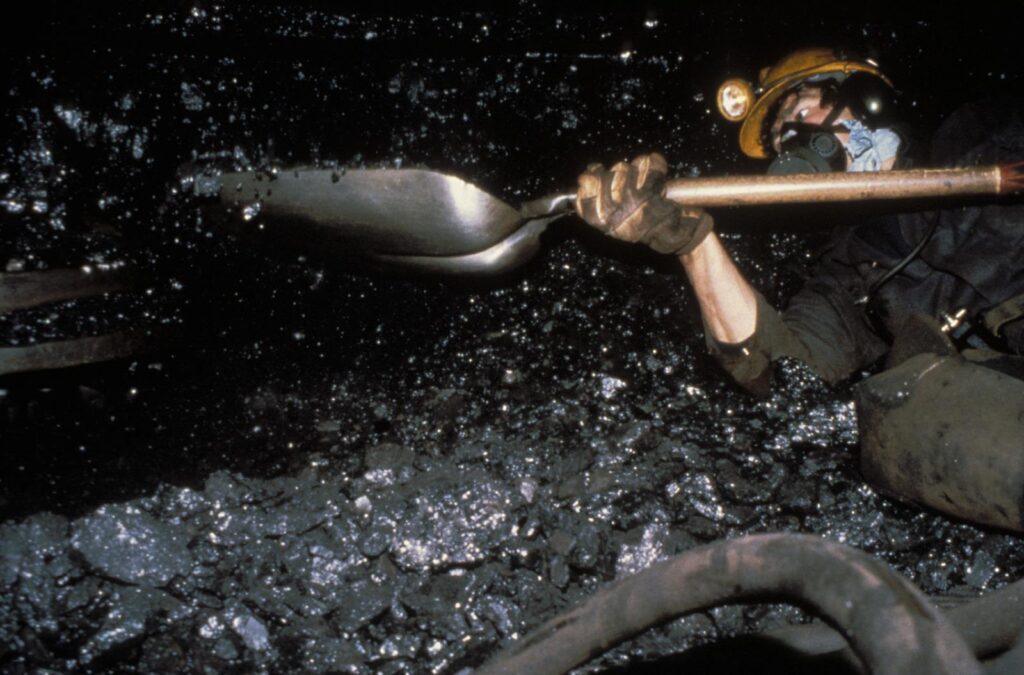
The “kuttskiftet” worked mostly on their hands and knees or lying on their backs, pushed into the narrow tunnels. We worked as a team. Driller made holes into the black rock and Cutter used his machines to cut the coal into smaller pieces. The cut-helper lay on his back with a shovel and pushed the coal out from the narrow vein. Helpers could easily shovel up to 8,000 times during one shift.
The Helper was, as could be assumed, at the bottom of the social ladder and thus it became my first job in the mine. It was a rough training for a green rookie.
Those who could stand the physically hard, yet very monotonous work, was rewarded by being able to move up the social ladder. Many got homesick in the small, secluded town or got “fjellskrekk” – mountain frightened after hours and hours in the pitch-black mine. The number of workers leaving the mine after first months was large. Only the toughest could cope with this physically and mentally hard job.