
Weather in Svalbard is part of the adventure. Located between 74° and 81° north, the archipelago lies where cold polar air from the north meets milder and wetter air masses from the Atlantic. This creates a climate that can change quickly, sometimes within the same day.
Visitors often experience everything from bright sunshine and clear skies to fog, wind or snow within a few hours. The ever-changing conditions are part of what makes travelling in the High Arctic such a unique experience.
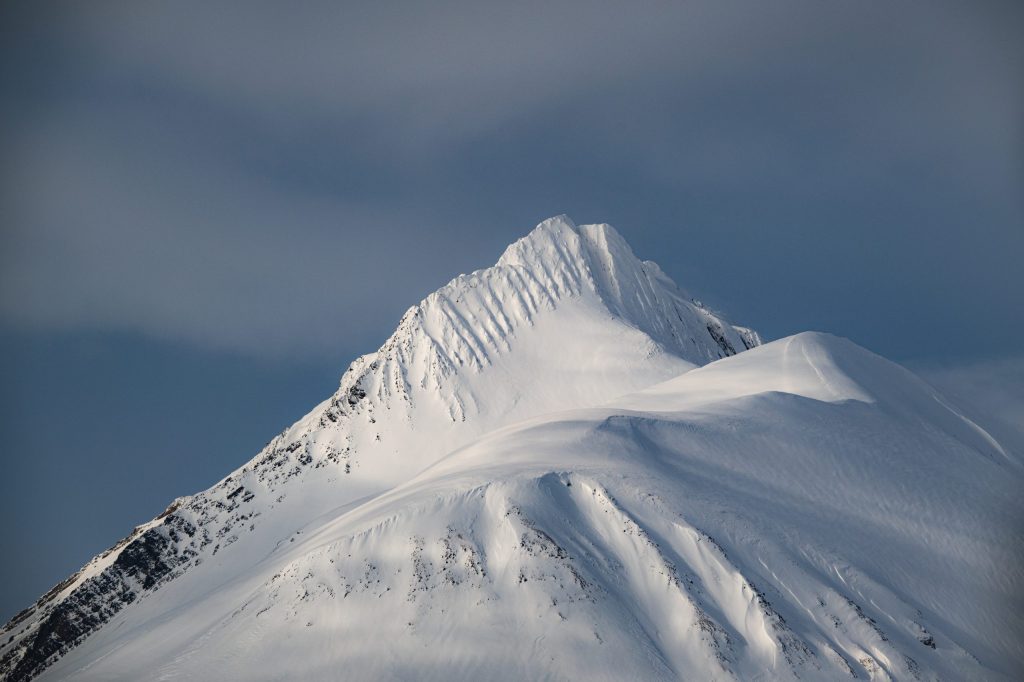
A Milder Arctic Than You Might Expect
Despite its extreme northern location, Svalbard is milder than many other places at the same latitude. The West Spitsbergen Current, the northernmost branch of the Gulf Stream, carries warm Atlantic water northwards and moderates the temperatures.
Average winter temperatures in Longyearbyen are typically around −12 to −16°C, while summer temperatures often range between 3 and 7°C.
However, wind, humidity and rapidly shifting weather systems can make the temperature feel much colder — especially during winter expeditions.
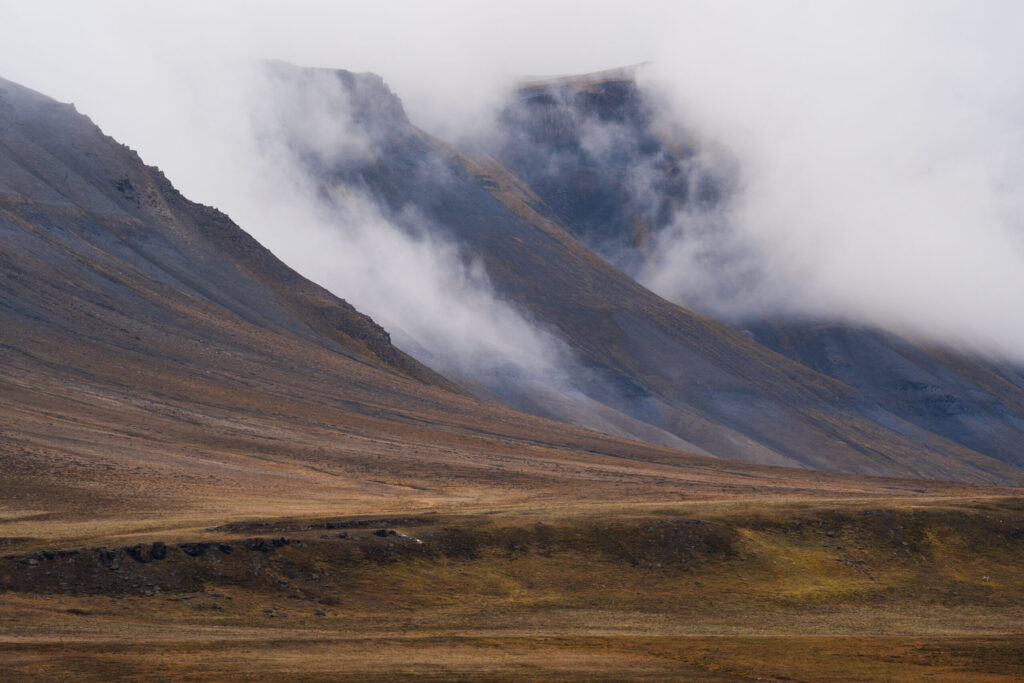
A Landscape of Wind, Light and Rapid Changes
The weather in Svalbard is known for its variability. Strong winds and low-pressure systems frequently move through the archipelago, particularly during winter.
In summer, fog is common along the coast and around glaciers, sometimes reducing visibility dramatically. Snowfall can occur in almost any month of the year, and even in summer it is not unusual to wake up to a thin layer of fresh snow on the mountains.
For explorers, this unpredictability is simply part of life in the High Arctic.
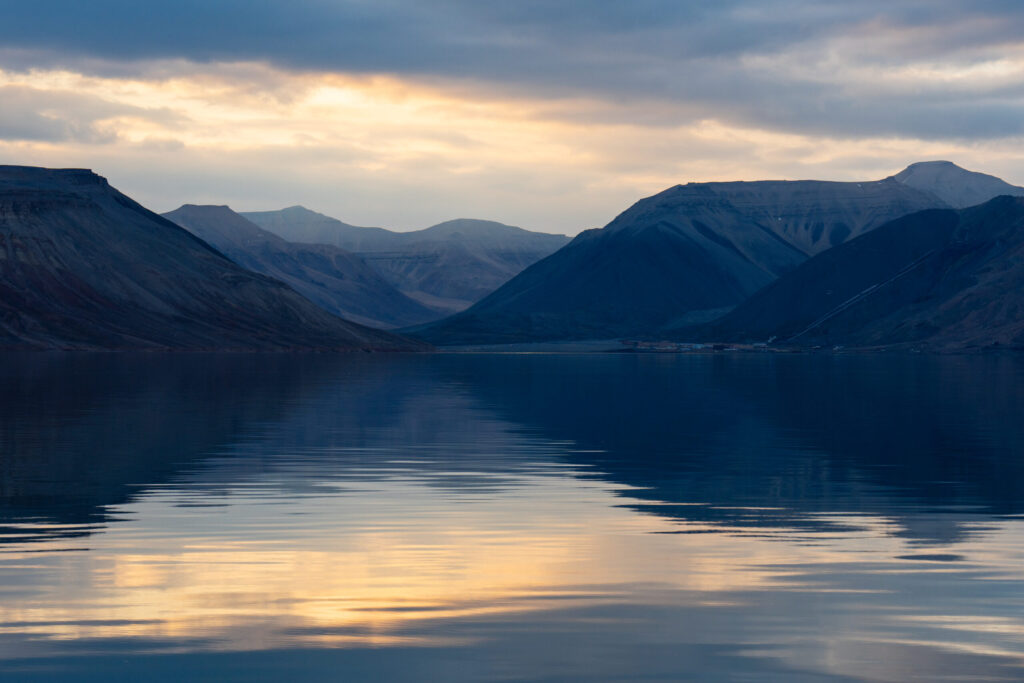
Light Shapes the Weather Experience
What truly defines the feeling of the weather on Svalbard is light. The archipelago experiences the midnight sun from mid-April to late August, when the sun never sets. In contrast, the polar night lasts from late October to mid-February, when the sun remains below the horizon.
These dramatic shifts in light transform the landscape and the way the weather is experienced. A calm summer evening beneath the midnight sun feels completely different from a winter day when pastel colours spread across the snowy mountains.

Checking the forecast
Before heading out into the Arctic wilderness, it is always wise to check the latest weather forecast.
The most widely used source in Norway is yr.no, a service provided by the Norwegian Meteorological Institute. It offers detailed forecasts for Longyearbyen and other areas of Svalbard, including wind, precipitation and temperature.
Even with a forecast, however, the weather in the High Arctic can change quickly. Travelling with experienced guides and proper equipment is always recommended when exploring outside the settlements.
 PREVIOUS STORY
